
Unlock Levels
TLDR: Unlock Levels is really cool. It is the real deal.
I previously wrote a Tweet storm on my experience with the Levels app after my first week. This is a slightly longer, more in-depth look after ~1.5 months.
Tweet storm of first week:
My thoughts on the @unlocklevels beta after one week.
— David (@d_v_dlee) June 7, 2020
TLDR:
1. Really cool wearable; one day will be THE wearable.
2. Extremely powerful - insulin sensitivity is linked to longevity; controlling this ⬇️ risk of HTN, ❤️ disease, cancer, etc.
3. Enables good habit formation.
Results
Let’s start with the stuff that really matters: results.
In January 2020, I had a DEXA scan. According to the DEXA scan, I was 181 pounds and had a body fat percentage of 18.5%. This objective measure prompted me to get serious about making a change.
While I made some improvement, things really took off once I started Levels in June.
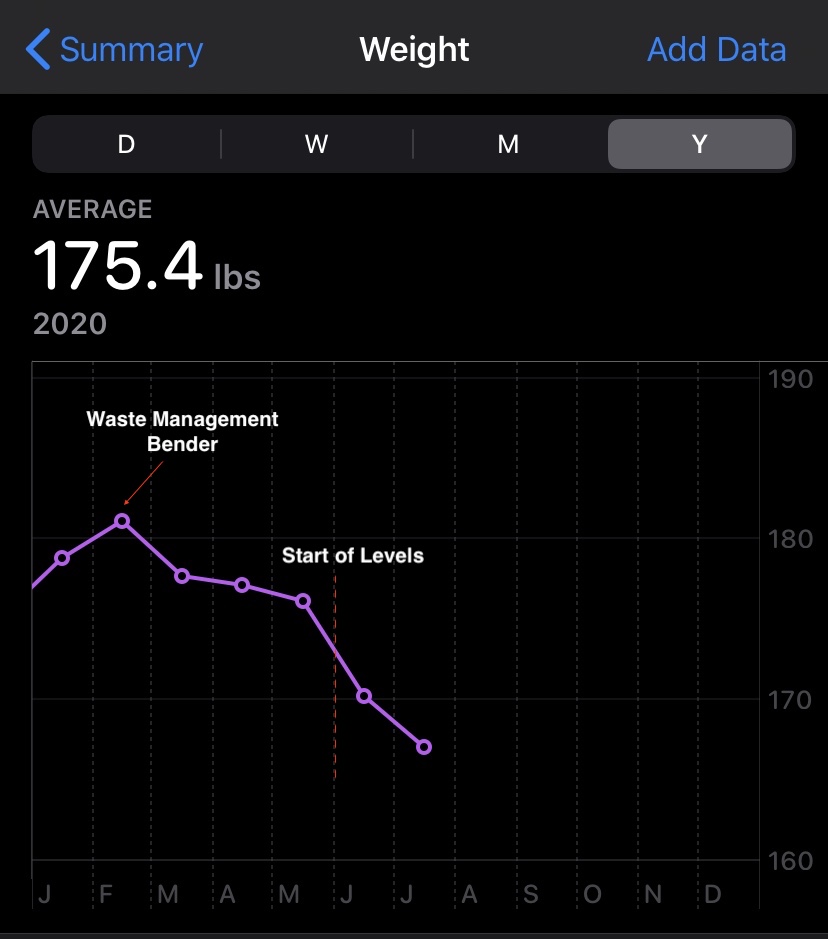
| Month | Avg. Weight |
|---|---|
| Feb | 181.06 |
| March | 177.62 |
| April | 177.23 |
| May | 176.12 |
| June | 170.12 |
| July | 166.98 |
While I haven’t gone in to get a new DEXA scan, using the assumption that my bone mass (7.8 lb) and lean mass have not changed (139 lb), my new body fat percentage is 11.5%. In just 1.5 months, Levels has enabled me to achieve what I set out to do in January.
So What Does Levels Do Again?:
Levels combines hardware (Abbot Freestyle Libre Continuous Blood Glucose Monitor - CGM) and software (app) to provide you instant feedback on your behavior (eating + exercise).
The CGM is a monitor that is attached to your arm via a very small needle (painless and quick, sometimes mildly irritating) that continuously tracks your blood sugar. Each monitor lasts for 14 days.
The Levels app then takes the CGM readings and provides you digestible actionable information. For example, for every meal you eat, Levels calculates a Zone Score (1-10) that represents how the meal affected your body (1 - bad; 10 great). Overtime, you can see what foods lead to stable blood sugar and what foods lead to large and long spikes and adjust accordingly.
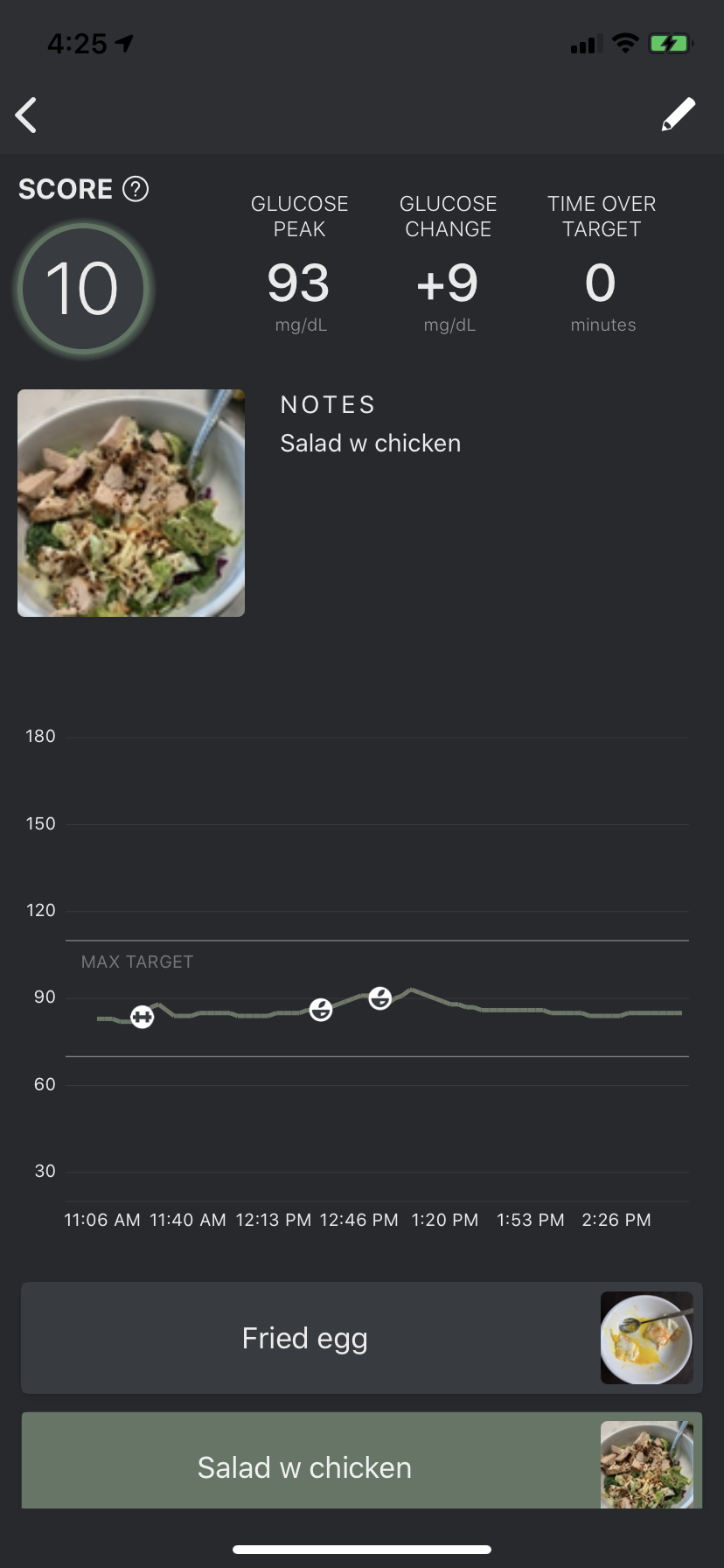
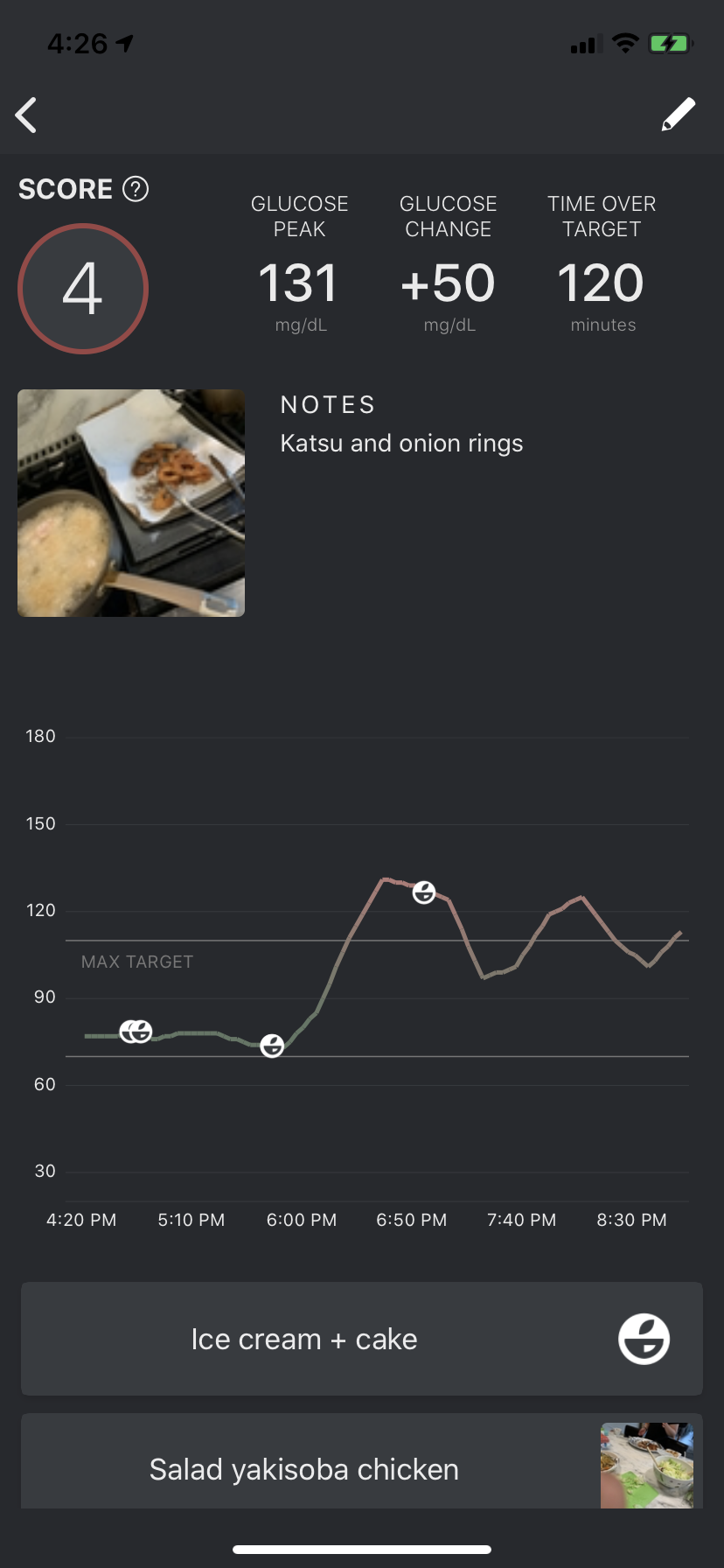
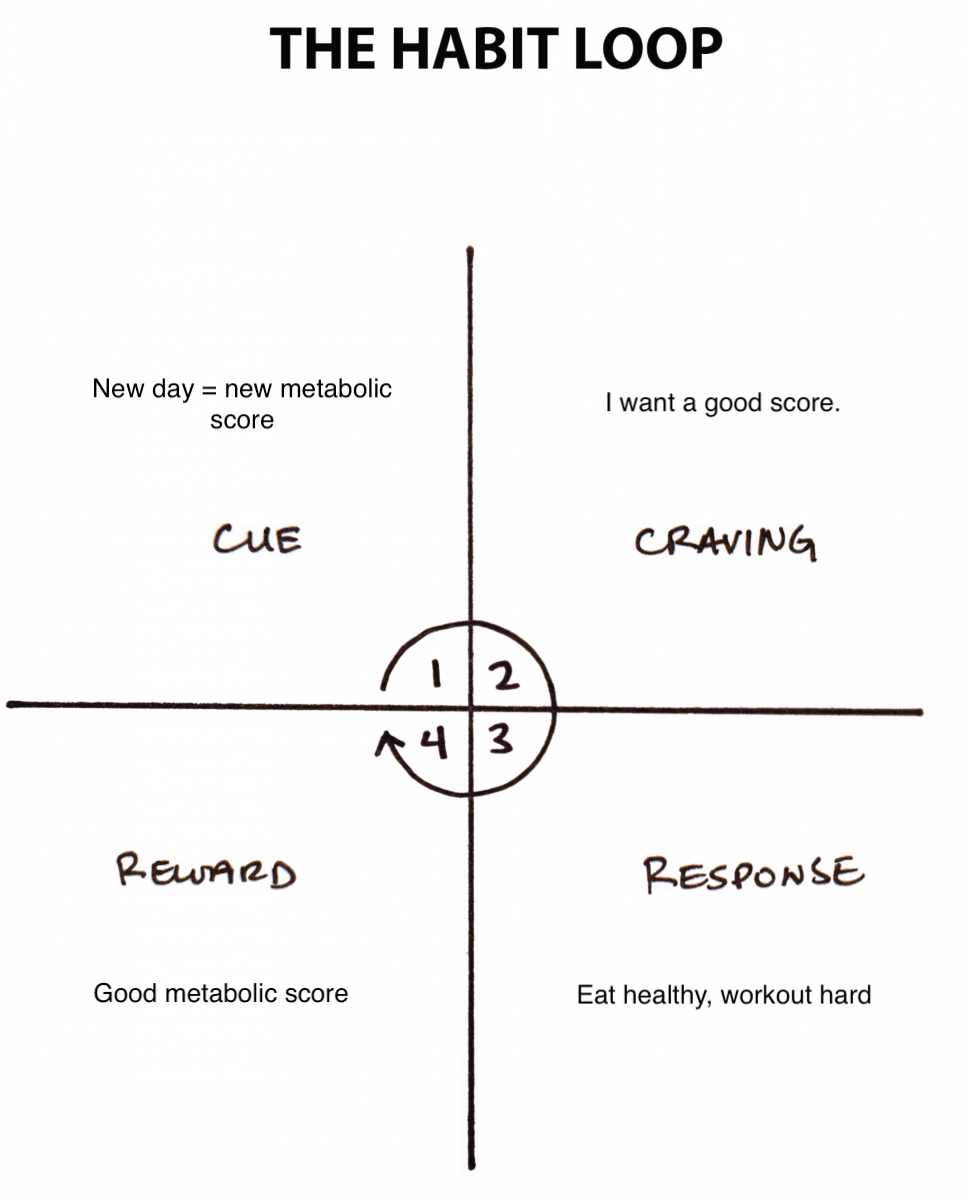
Ultimately, what Levels provided for me was a tool for habit formation. I could see the immediate consequences of both positive and negative actions that normally took weeks/months to understand.
Short and Long Time Frames
Before my Levels shipment arrived, I planned out every workout I was going to do for the next 30 days and set goals in three different timeframes: daily, weekly, and monthly.
But before diving deeper in that, a brief tangent.
I’m not one who likes to get dogmatic about eating because people get very tribalistic about their beliefs but overall I used Peter Attia’s philosophy on eating as a template.
He suggests pulling on three main levers:
- Calorie Restriction (how much you eat)
- Time Restriction (when you eat)
- Dietary Restriction (what you eat)
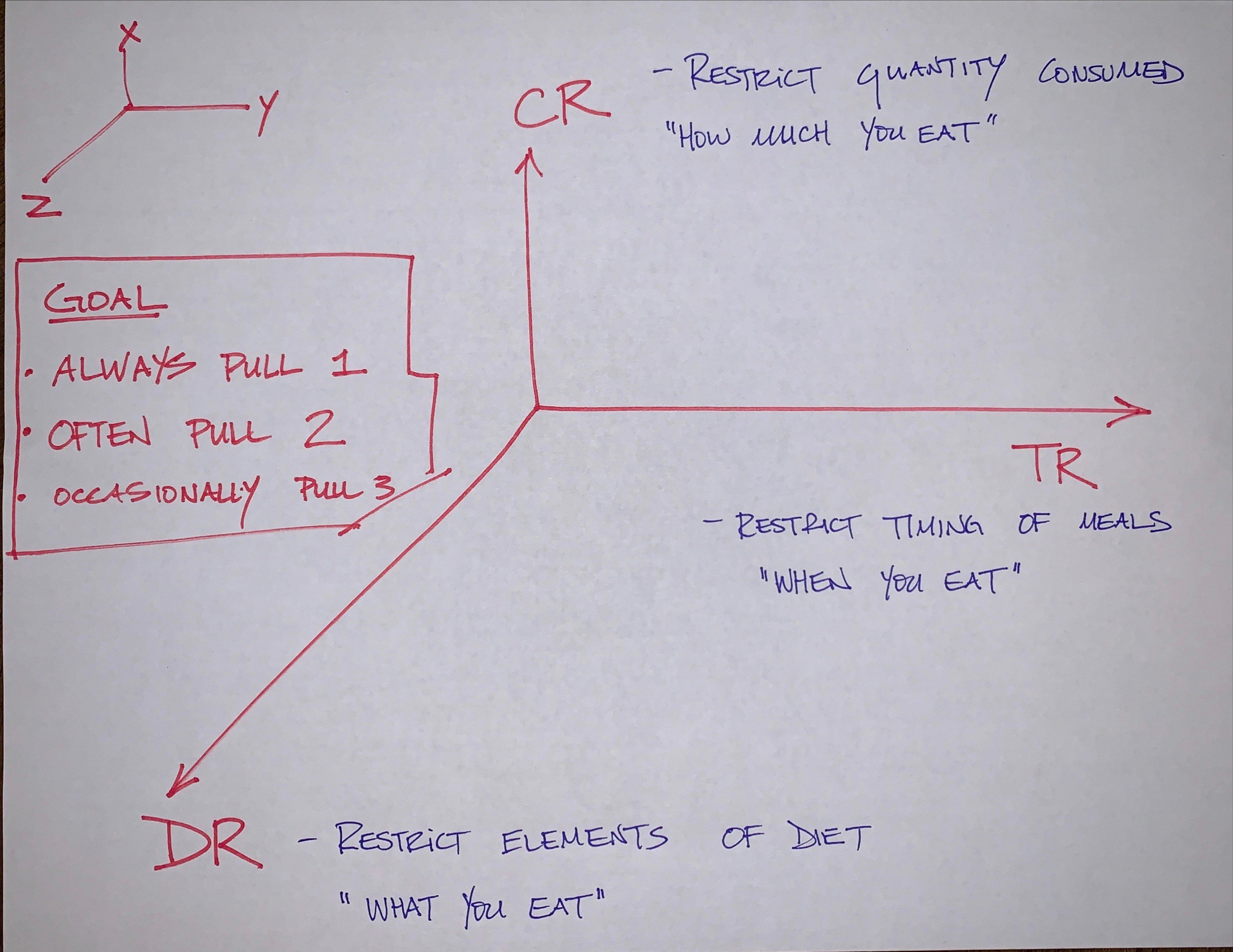
Three Pillars of Eating via Peter Attia
Part 1: Summary of my framework for nutrition.
— Peter Attia (@PeterAttiaMD) October 23, 2019
This is probably the most concise way I can provide a comprehensive overview of how to manipulate nutrition to impact health. Feedback appreciated, as I love refining frameworks and models! pic.twitter.com/zNc3ayy5vW
Back to timeframes.
At a daily level, a successful day to me was two simple things: working out in the morning and achieving a good metabolic score via Levels. My plan for achieving a good metabolic score was to intermittent fast until at least noon every day and create an environment conducive to my goals (healthy whole foods in the house - remove temptation so I don’t have to fight it)
At a weekly level, a successful week was following through on every planned workout (or rest day) and 5/7 days with a metabolic score >= 70. Choosing 5/7 days allowed me to be directionally correct in my behavior while also having the liberation to do whatever I chose on weekends. I didn’t have to use the two days but they were there.
Lastly, at a monthly level, a successful month going 4/4 on my weekly goals.
Once my shipment arrived, I had Levels and I had a plan. As you can see, it worked.
Five Last Points: Things I Learned, Liked, Want to see
-
I could get away (lesser or shorter glucose spike) with eating “naughty” things (ice cream, a shit ton of Mediterranean food) if I was “good” for 3-4 days before hand. Once I was in rhythm and had a few 5/7 good weeks, if I worked out hard and ate well earlier in the week, I could eat something that would normally destroy blood sugar, with lesser effects. My hypothesis is that being directionally good consistently, improved my insulin sensitity and lowered my glycogen stores so that as soon as glucose entered my body, it was largely shuttled directly to my muscles and liver.
-
Eating well 5/7 days made the food I love that much better. Honestly, the food I ate most days was healthy and delicious (shout out Molly), but eating something after I felt like I “earned” it made it that much better. I found myself really enjoying each bite versus my usual method of decimating food instantly.
-
Focusing on only two things 1) exercising every planned day and 2) achieving a good metabolic score drove other positive behavior. Consciously doing two healthy things made me unconsciously do other healthy things.
-
Levels as an exercise guage. I used my blood glucose to gauge the intensity of my workouts. Pretty much, I split my workouts between hard, intense workouts and long, slow ones. For an intense workout, I wanted to see an intense blood glucose spike (body needs energy!). For a less intense one, I wanted to see a minimal to negative spike (switch fuel source).
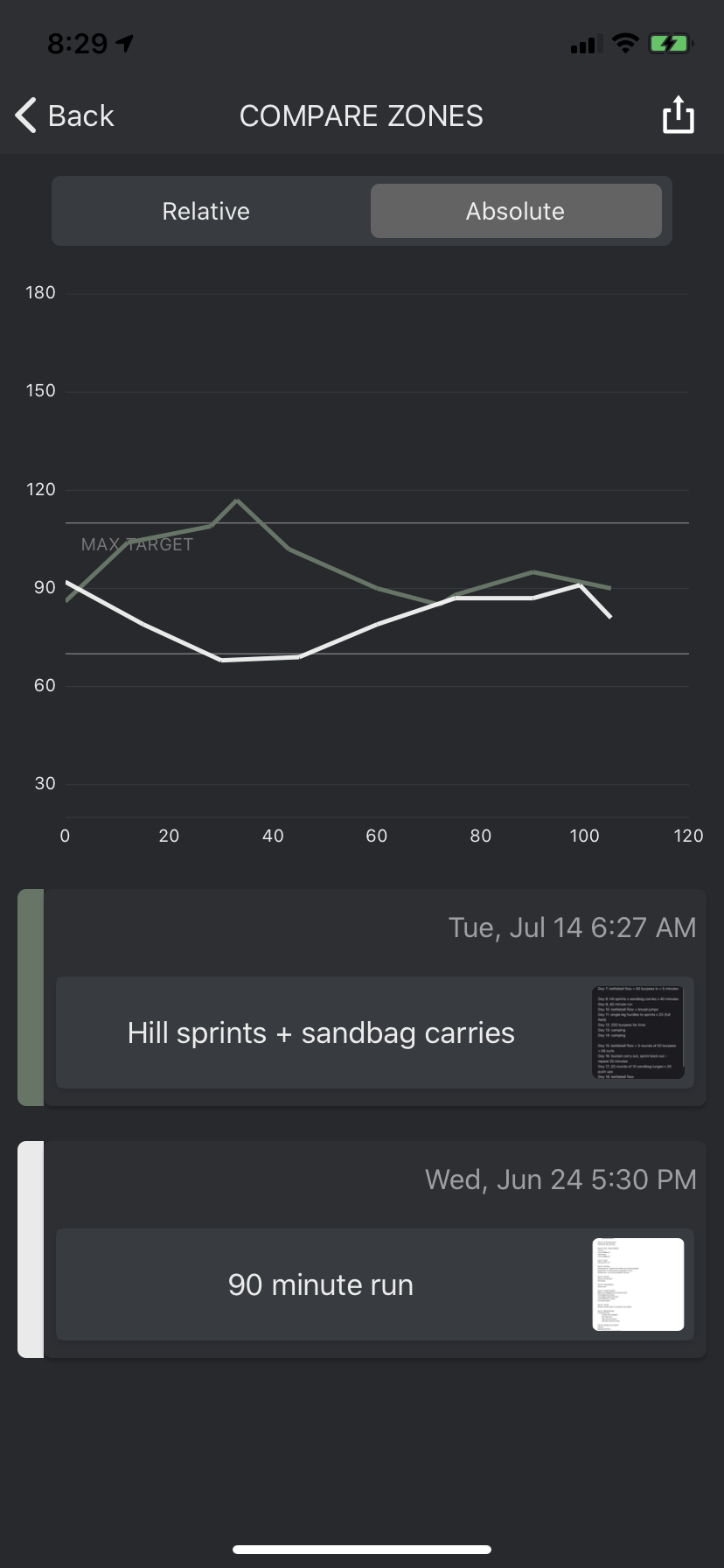
Above you can clearly see the difference between long, slow exercise (10-mile run - don’t know how anyone runs a marathon or ultra-marathon) and intense sprints.
- My hope is that one day, once it scales, Levels is readily available to everyone. If it can one day have a fraction of the user-base of an Apple Watch per say, populations would be drastically healthier. While it obviously doesn’t come with as many health features as an Apple Watch, I’d argue it is much more important to one’s well-being. Pairing Levels with community outreach could also drastically improve the interest and compliance of health literacy campaigns in underserved populations.
The End
Levels is currently in Beta and one of the coolest products I’ve ever used.